By Dr. Jennifer Gazda, LCSW, NCG, CMC, CDP
When Siblings Clash Over a Parent’s Care
In a perfect world, families would all agree and get along with each other during stressful situations or times of transition. Unfortunately, this is not often the case and not that uncommon. Families are in a constant state of change as there are transitions as we age and experience different stages of life. When an aging parent needs assistance, it is typically the children of the parent(s) who work together to make decisions.
What happens when the adult children disagree and cannot come up with a plan to support their loved one?
How can an Aging Life Care Professional assist in navigating the decision-making process and move towards a positive outcome?
From personal experience, I find that adult children, sibilings, and extended family often make decisions for their parents instead of including them in the discussion. It is not meant to be with ill intention, but we are quick to try to find solutions to problems and move on. For example, let’s consider Joe* who is starting to show signs of cognitive decline. One child may want to move Joe to an assisted living facility and another child wants him to move into their house, but Joe has said for years he does not want to live anywhere else. Who gets to make this decision? Even if it’s unanimous among the family to move Joe, how are you going to physically have him leave his home when he is adamant to not leave? These types of decisions impact families in many ways and can cause family tension, which only further exacerbates the problem.
When navigating difficult conversations with adult children, especially around aging parents or care decisions, thoughtful communication and mediation can make all the difference. Whether you’re a professional, a designated decision-maker, or a family member trying to help, here are key principles to guide productive and respectful discussions.
Make Space for Every Voice
Adult children often bring different perspectives shaped by their subjective experiences and emotions. Allowing time for each person to share their thoughts, without interruption, builds trust and reduces defensiveness. Even when disagreements arise, being heard can lower tension and move the conversation forward.
Consider the Challenges of the Power of Attorney (POA)
When a Power of Attorney (POA) has been appointed, their role can be both essential and challenging. They may face criticism or frustration from siblings who feel left out or disagree with decisions. Supporting the POA sometimes means helping absorb complaints, reinforcing that decisions are being made in good faith, and reminding everyone of the legal and ethical responsibilities involved. An Aging Life Care Professional can support the POA through these challenging situations with an aim to prevent burnout and preserve family relationships.
Education About Aging and Disease
Misunderstandings about the aging process or specific medical conditions can fuel conflict. Providing clear, accessible education about what is normal aging versus disease-related change helps set realistic expectations. When families understand cognitive decline, mobility limitations, or chronic illness progression, they’re often better equipped to respond with empathy rather than resistance.
Center the Conversation on the Older Adult
In emotionally charged discussions, it’s easy for family dynamics to overshadow the person at the heart of the matter. Always return to the most important question: What does the individual want? Their preferences, values, and quality of life goals should guide every decision whenever possible to allow for dignity and autonomy of the person.
As an Aging Life Care Professional, I have had the opportunity to work with many families over the years. Even the closest of siblings experience struggles and challenges at times, and it is one of the best parts of my work to help support families through these discussions. It can be especially difficult and frustrating for adult children when they live a long distance away from their aging parents. Emotions run strong when you cannot take a quick drive to go check in or when there is a crisis and you are not receiving updates as quickly as you would like. It also may feel like you are excluded from being involved in decisions because you are not physically present with your parents. In the work I have been able to do with families that are not local, I have been able to not only advocate and support the older adult client, but also provide real time updates to the long distance child and give reassurance.
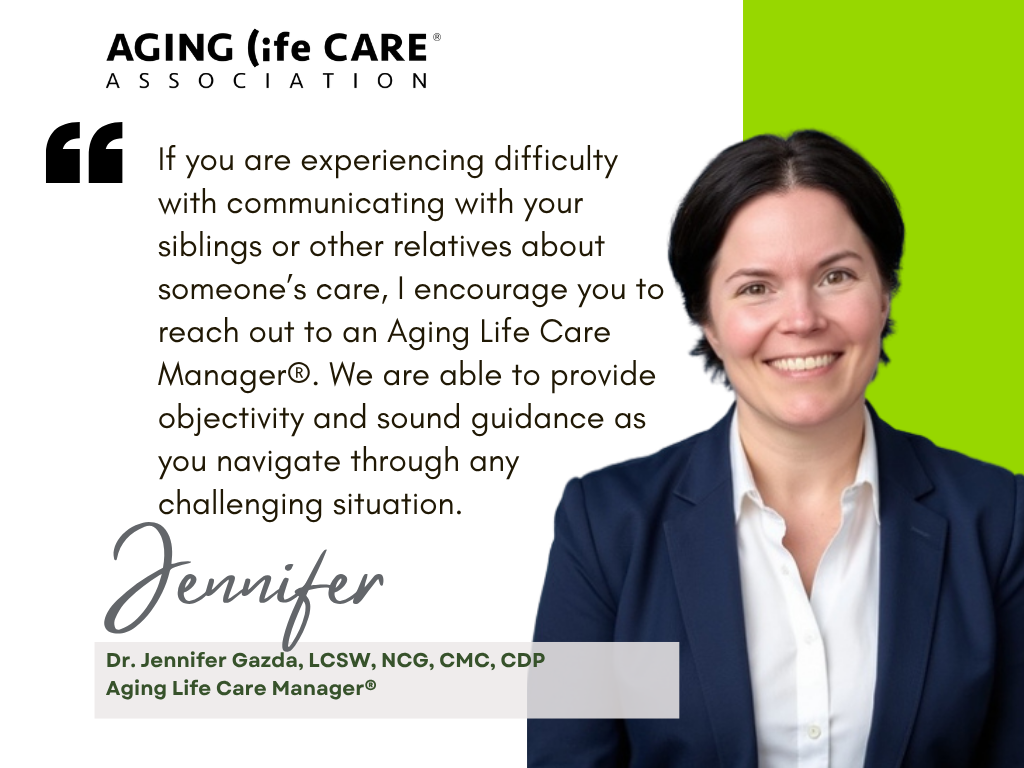
If you are experiencing difficulty with communicating with your siblings or other relatives about someone’s care, I encourage you to reach out to an Aging Life Care Manager. We are able to provide objectivity and sound guidance as you navigate through any challenging situation.
To find an Aging Life Care Manager near you and get the support your family needs, visit the Aging Life Care Association’s “Find an Expert” directory.
About the Author
Jennifer Gazda, DSW, LCSW, NCG, CMC, CDP, is the Director of Integrated Care Management and Home Care at Arosa. With more than 20 years of experience, she specializes in Aging Life Care management, clinical supervision, and supporting older adults and individuals with complex needs. Dr. Gazda is also an Adjunct Professor at Aurora University and an active leader in several professional organizations. She is an Advanced Professional member of the Aging Life Care Association and serves on the Board of Directors for the Midwest Chapter.